
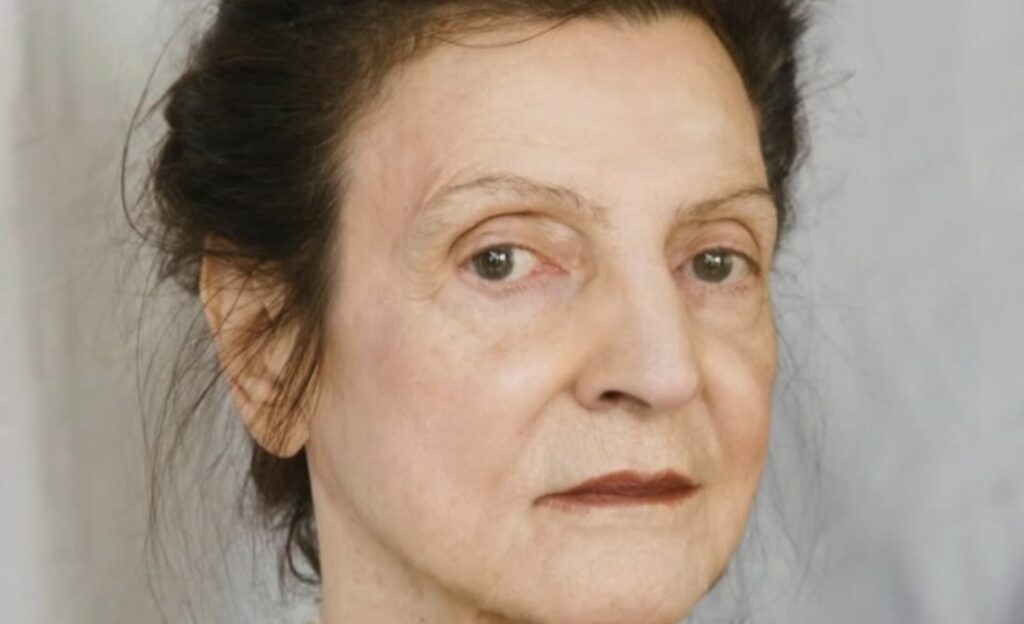
Irmi Horn (Dipl.Päd.in) Künstlerische Leitung und Geschäftsführung Irmi Horn
Irmi Horn reads the story and compares it to the film adaptation by Patrice Leconte.
A passionate, forbidden love. A professional opportunity overseas. Then see you again. His “Journey into the Past” confronts the protagonist Ludwig with the changes that the passing time inflicts on us. This story from Stefan Zweig’s estate about a great love has become a bestseller in France. With extraordinary sensitivity for the human psyche, Stefan Zweig shapes in his stories the merciless progressing life and the damage that reality can cause in our soul.
Stefan Zweig, photo of an illustration from “Über Land und Meer”, 1913
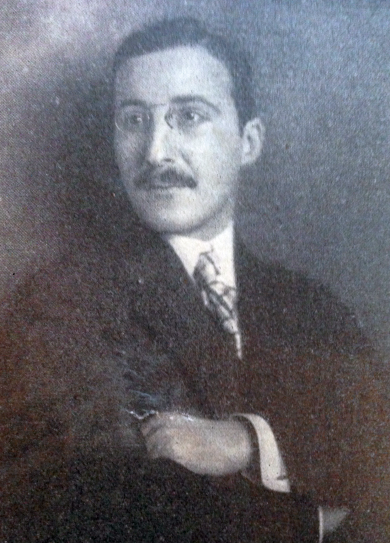 Stefan Zweig (b. November 1881 in the 1. District of Vienna, Austria-Hungary; † 23. February 1942 in Petrópolis, State of Rio de Janeiro, Brazil) was an Austrian writer, translator and pacifist. From 1919 he lived in Salzburg, before emigrating to England in 1938, later to the USA and finally to Brazil in 1941. With his stories and historical representations, he reached an audience of millions worldwide. Finally, he completed his autobiography ›Die Welt von Gestern‹ and the ›Schachnovelle‹. On the 23rd In February 1942, he retired from life together with his wife “of his own free will and with clear senses”.
CITY-SALZBURG.AT
Stefan Zweig grew up in Vienna in a middle-class, non-religious family. Already during his philosophy studies, he turned intensively to writing. In 1914, he (like many other of his contemporaries) fell short to the collective euphoria of the World War, but quickly became a declared pacifist and migrated to neutral Switzerland. In 1917, together with the writer Friderike Winternitz – she turned from Judaism to Catholicism in 1905 – he acquired the Paschinger Schlösssl on the Kapuzinerberg in Salzburg; the move took place in 1919. Stefan Zweig lived in seclusion and shunned Salzburg social life. He appreciates the landscape of Salzburg, used the advantageous location for countless trips and received visits in his villa from friendly intellectuals from all kinds of countries. Thus, the Paschinger Schlössl became a place of international high culture.
When the Nazis took power in Germany in 1933, Stefan Zweig was one of the most widely read writers in the German-speaking world and was world famous for its translation into numerous languages. His literature was banned and fell victim to the book burning staged by the German student body – also the one in Salzburg from 30. April 1938.
Stefan Zweig was already attacked in the 1920s, a victim of rampant anti-Semitism in Salzburg and in the newspaper “Der Eiserne Besen”. In 1934, at the time of the Austro-fascist regime and immediately after the February fighting, police officers searched his villa for weapons – an illegal act that suddenly made him realize that he was no longer safe here. He left Salzburg and came to London via Paris. As early as 1934, his love affair with his secretary Lotte Altmann began. The marriage with Friederike was divorced in 1938. Shortly after the outbreak of the Second World War, Stefan Zweig and Lotte Altmann married and emigrated a little later to the USA. Finally safe, but far away from his “spiritual home Europe”, he increasingly struggled with severe depression. Even a move to Brazil did not bring any improvement. At the beginning of 1942, Stefan and Lotte Zweig took their own lives; they were at the end of their powers.
In Salzburg, Friderike Zweig feels left alone in the dissolution of the household and the sale of the house. It was not until 1937 that a purchase contract could be concluded with the Gollhofer family. Friderike Zweig lived with her two daughters from her first marriage, Alice and Suse Winternitz, in Nonntal in a villa rented by Stefan Zweig for her. Together with her daughters, she reached the USA via France, where she lived in Stamford, Connecticut. In 1943 she founded the Writers Service Center, an aid organization for refugee writers, and in 1954 the American-European-Friendship-Association. She was also honorary president of the International Stefan Zweig Society. During her four trips to Europe, she deliberately avoided Salzburg – her “lost paradise”. The role previously attributed to Friderike Zweig as a supporter of the successful husband, who claimed the status of the sole administrator of Stefan Zweig’s intellectual heritage and thus the sovereignty of interpretation over his work, is currently being questioned or expanded. New research refers to her role as a journalist, novelist, translator, women’s rights activist, peace activist, literary mediator as well as as an interlocutor, critic and possibly also co-author of Stefan Zweig.
Today, there are several memorial signs dedicated to the world’s writer in the city of Salzburg: As early as 1956, that path at Kapuzinerberg, which led to Stefan Zweig’s former residence, was named after him; in 2019, the adjacent square at Linzergasse was renamed Stefan-Zweig-Platz. Since 2014, the Salzburg University of Education has also been named after Stefan Zweig. In 2016, stumbling blocks commemorating the fates of the world’s writer, his ex-wife Friderike and the stepdaughters were laid. Since 2011, a memorial plaque in the Nonntaler Hauptstraße has marked Friderike Zweig’s last place of residence.
INFORMATION
- Please make reservations not later than 2 hours before the programme begins: kunstGarten@mur.at or +43 316 262787
- Price