
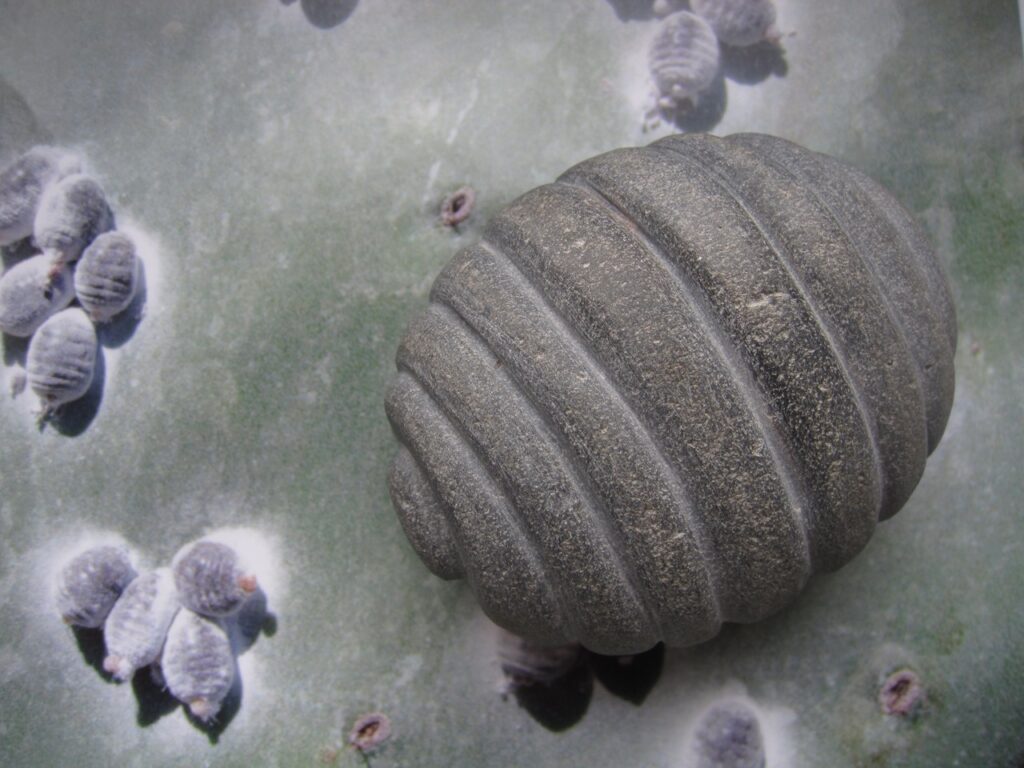
Christine Ulm, "Dactylopius coccus", 2026, Basalt & Natur
WHAT DO WE NEED? Josef Fürpaß A, Christine Johanna Ulm A.
Curated by Irmi Horn
Welcome: Deputy Major Mag.a Judith Schwentner
Opening Speaker: Elisabeth Zuparic, MA
Josef Fürpaß and Christine Ulm explore different approaches to connect with what is essential in our lives: experience, joy, insight, and mortality.
The coexistence of such diverse human worldviews—some of which present themselves as innocent due to their epistemological ignorance, while others react aggressively against opposing perspectives—has brought us into an explosive state: Despite many advances in knowledge, the destruction of the world continues unchecked.
Therefore, what is needed is a critical empathy, respect, and commitment: against egocentrism, which prioritizes personal importance and individuality above all else and fails to recognize the possibility of placing this uniqueness in the service of humanity in the spirit of human rights.
Growing up offers many the opportunity to gather knowledge, experience joy, develop their skills, forge connections, discover common ground, and shape their environment.
The experience will likely lead us in the direction of recognizing that we live in mutual dependencies, and that to shape these relationships joyfully requires acceptance, respect, and mindful use of our time. In this way, we have the opportunity to approach the world with love.
The media that support humanity are nature, art, and science.
Curator: Irmi Horn
The exhibition runs until March 7, 2027.
Josef Fürpaß, born in Feldbach, Styria, in 1970, attended a humanities-focused secondary school from 1970 to 1978 (graduating) and lives in Graz and St. Katharein an der Laming, Austria, working as a book designer, illustrator, painter, and bandoneon player.
He is a founding member of the DruckZeug association and was the operator and program director of the Keplerkoje in Graz from 2012 to 2014. He is also a co-founder of the Am Glacis, Art & Culture association (2025).
From 2011 to 2025, he was a lecturer in the master class for art and design at the Ortweinschule Graz, specializing in painting and analog printing techniques.
Since 1985, he has worked as a freelance designer with numerous exhibitions in Austria, Germany, and Switzerland, and his work has been acquired by various private and public institutions (including the Ferdinandeum Tyrolean State Museum, the State of Styria, the City of Graz, and the Vienna Art Library).
He is a prize winner at the 1st Ex Libris Competition in 1986 (commissioned prize from the CA); is a book designer and illustrator for several publishers (Bibliothek der Provinz, Haymon-Verlag, Yara-Verlag, CLIO Graz); his work has been published in magazines and journals (STERZ/Graz/Austria, SPEKTRUM/Zurich/Switzerland, WOCHENBLATT/St. Gallen/Switzerland, Offizin S/Merano/South Tyrol).
Reflections by Josef Fürpaß on GROUNDED ILLUSIONS:
1. Psychology & Spirituality: Acceptance of Reality
In psychology and modern mindfulness practices, “being grounded” describes a state of stability and connection to reality. “Grounded Illusions” can mean the following here:
Spiritual Acceptance: A belief in things that transcend the tangible, yet create a grounded spiritual acceptance that is helpful in everyday life.
Perceptual Correction: While illusions are often misinterpretations of stimuli, “grounding” helps to recognize these deceptions (such as fear-induced projections) and return to human reality.
2. Art & Culture: Tangible Illusion
In the art world, the term is used to describe works that present fantastical elements in such a way that they appear plausible and “real”: in Theater and Ballet, productions are often described as “grounded” when, despite a fantastical or abstract framework (e.g., Shakespeare’s spirit world or Swan Lake), they remain humanly tangible and plausible.
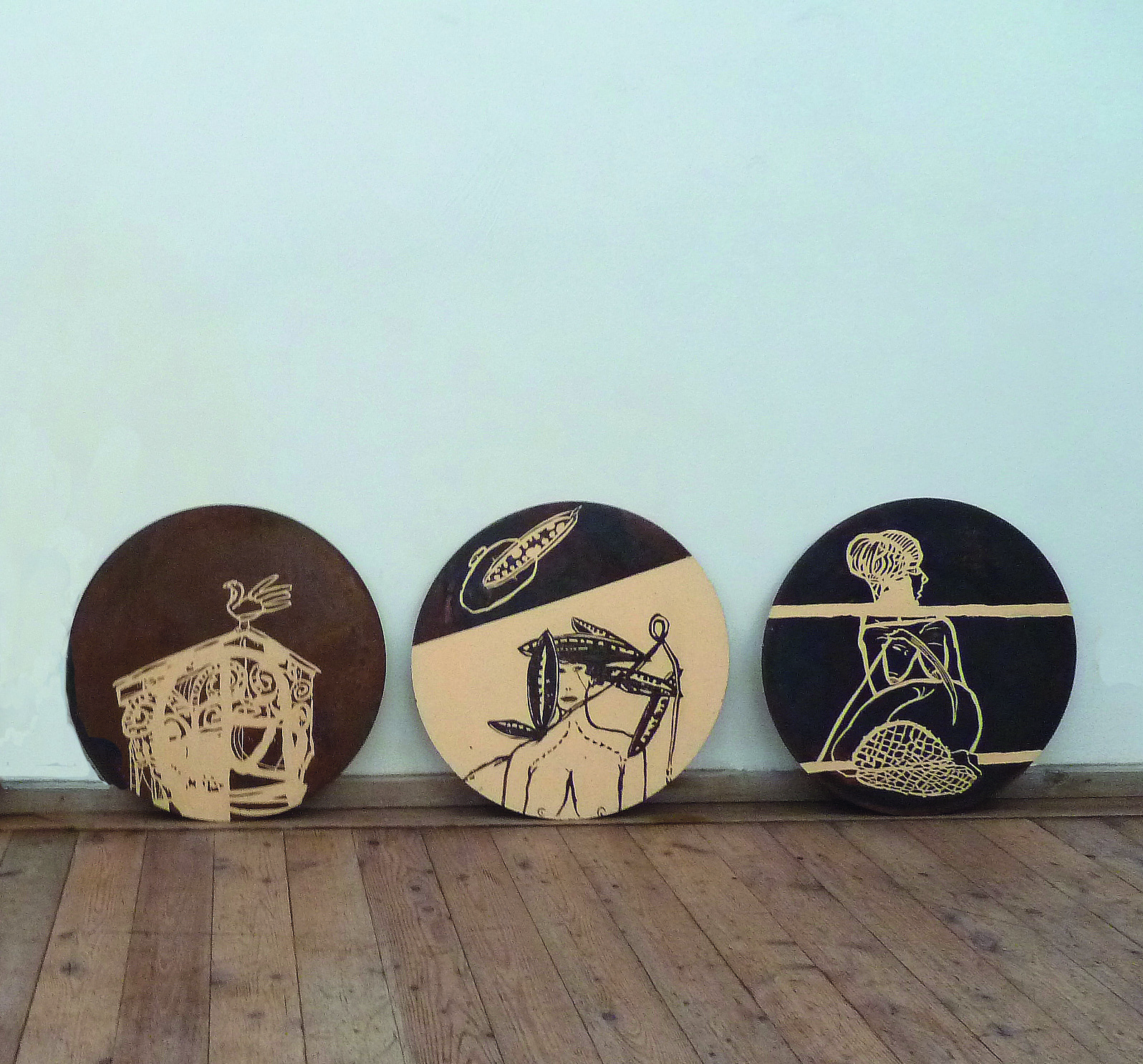
Josef Fürpaß, Three stencils from the series “ON BECOMING AND PASSING AWAY”
(Paint on copper discs, ⌀50 cm; 1996)
Christine Ulm, born in Mürzzuschlag, Styria, in 1957, lives in Vienna and Spain. From 1986 to 1993, she studied sculpture at the University of Applied Arts in Vienna and at the Faculty of Fine Arts in Barcelona.
She presents an “Insect Burial” (working title), a ziggurat.
In an artistic and aesthetic way, she depicts the value of the diversity of insects for a “healthy” world, a diversity we are losing through carelessness, ignorance, and greed.
“Aside from the section focusing primarily on the local climate zone, the artistic ziggurat on display also incorporates objects I discovered during extended stays in Spain, both in Mediterranean and subtropical regions. I hope to inspire some to take a closer look at the many wonders that surround us, to experiment with forms and flavors, and—last but not least—to foster an awareness that this wondrous world must be cared for. The thread of this theme, which has fascinated me since my youth, leads from my teacher, Prof. Helmuth Schweiger (1914–1972), through gardens in various climate zones that I was privileged to use, to artistic objects and arrangements, in which my interest has gradually intensified. I hope that this will inspire some to take a closer look at the many amazing things that surround us, to experiment with forms and flavors, and—last but not least—to foster an awareness that this wondrous world must be cared for.”
“Monument for Small Animals” and a few thoughts on GROUNDED ILLUSIONS
My particular affinity for observing the nature surrounding me (especially the inconspicuous) leads me, once again, to focus on insects (more precisely, arthropods) in the announced presentation.
I am following the need to dedicate some of my collected specimens to the earth.
A ziggurat made of unfired clay, which will eventually decompose into earth, will serve as a worthy vessel for them.
This not clearly defined, pre-Christian “temple-building model” will be crowned by a small basalt sculpture depicting a cochineal insect.
The joy of being able to create this monument and dedicate it to the art garden is combined with the illusion (in Spanish, “ilusión” means joy) that attention to the inconspicuous and the capacity for wonder will continue to exist.
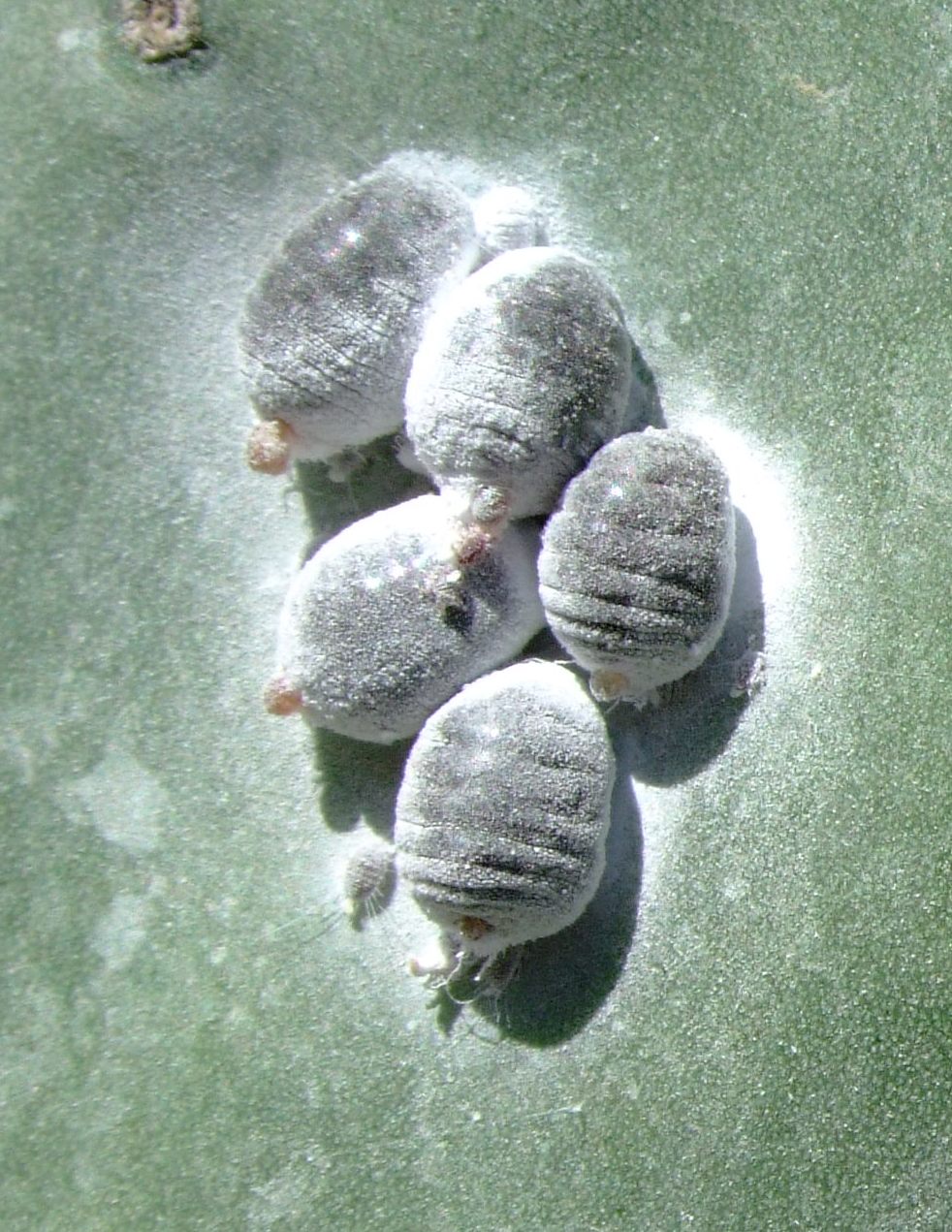
Cochenille
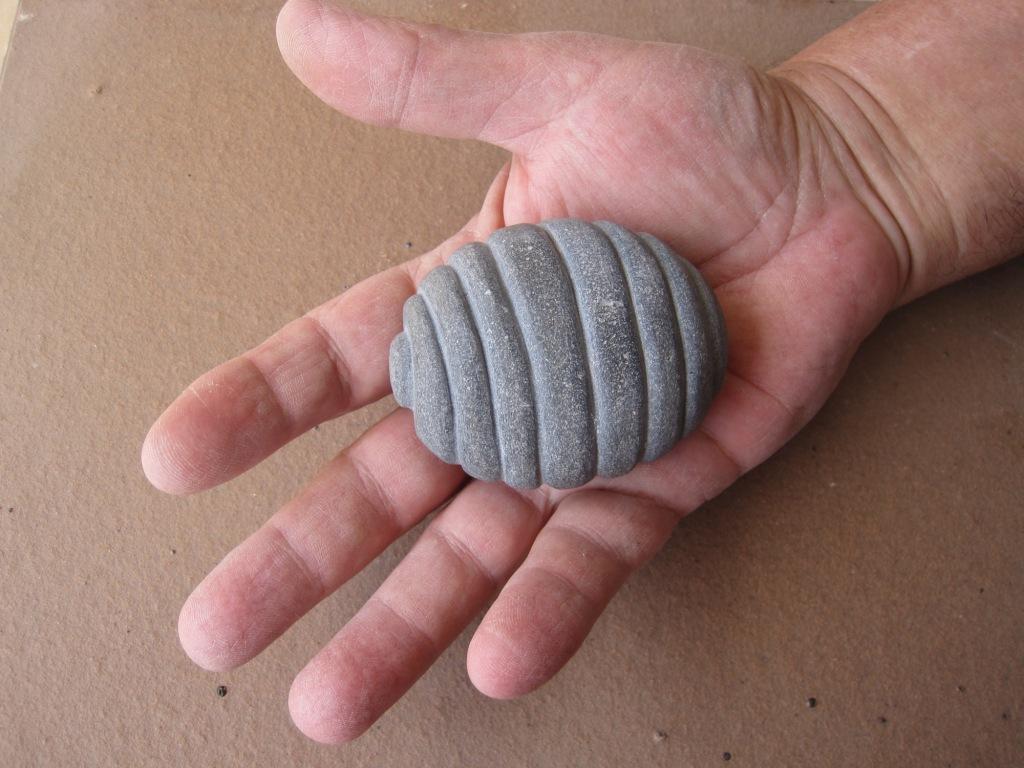
Christine Ulm, Cochineal scale insect, Basalt, 2026