
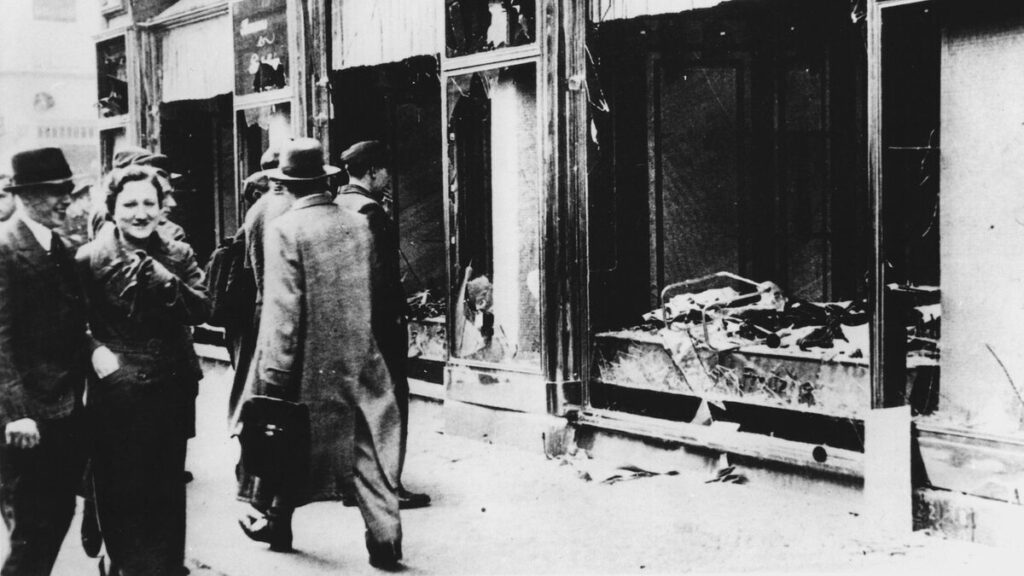
Gewaltexzesse gegen Jüdinnen und Juden in der „Reichskristallnacht“ am 9. November 1938 Foto: wikimediacommon
The November pogroms of 1938 were a sign of dehumanization. The culture of remembrance should shake us up and work against hatred and persecution.
Irmi Horn reads from GEDANKENSTRAHLEN.
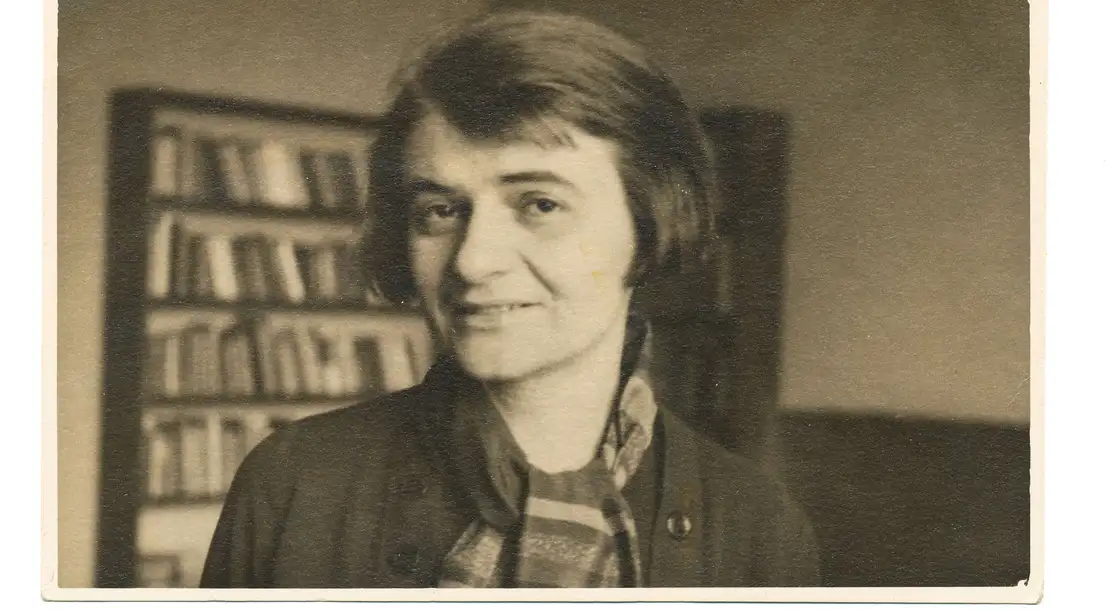
Maria Lazar 1945
Maria Lazar: Gedankenstrahlen / Erzählungen & Short Stories, 2026 – DVB Verlag
In her idiosyncratic, darkly humorous narratives, Lazar shows herself as an astute observer of the human soul. With prophetic clarity, she illuminates social constraints, political upheavals and the inner struggles of her characters. Their protagonists fight for self-determination, face the dark sides of life and break out of the conventions of their time again and again. With her concise, undisgued language and her deep psychological understanding of the abysses of human existence, Lazar draws her “unknown reader” into a hitherto unknown kaleidoscope full of encounters, contradictions, longings, border crossings and unheard-of experiences on the eve of the Second World War.
Maria Lazar, born in 1895, came from a bourgeois Jewish Viennese family. She graduated from the famous girls’ gymnasium of the Kugenia Black Forest, in whose salon Oskar Kokoschka portrayed her in 1916 and in which she met with numerous prominent figures of the Vienna cultural scene of the time. As a dedicated publicist, she wrote for renowned Viennese newspapers and Swiss newspapers since the early 1920s. When she reaches for the “Nordic” pseudonym Esther Gronen in 1930, literary fame sets in; a success that, however, comes to an end with Hitler’s seizure of power. Due to the repressive climate, she left Austria in 1933 with her daughter and first went into exile in Denmark together with the Bert Brecht family. In 1939 she fled to Sweden and voluntarily died in 1948 after a long, incurable illness.

INFORMATION
- Please make reservations not later than 2 hours before the programme begins: kunstGarten@mur.at or +43 316 262787
- Price